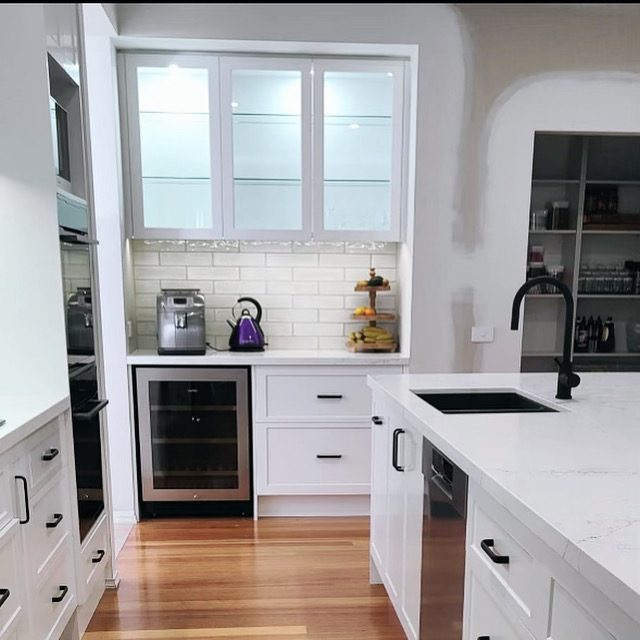
Why the L-shape is so widely used
The L-shaped kitchen places two runs of cabinetry along adjacent walls, forming an L. It works in a wide range of room sizes (from small apartments to large open-plan homes), integrates naturally with open-plan living and dining, and allows easy addition of a peninsula or island on the open sides.
Making the work triangle work in an L-shaped kitchen
The "work triangle" — the path between fridge, sink, and cooktop — should be efficient in a functional kitchen. In an L-layout, placing two of the three points on one arm and the third on the other creates a natural, efficient triangle. A common configuration is: sink at the corner or one side, cooktop mid-run on the opposite arm, fridge at the end of one run.
Corner storage — a genuine design challenge
The corner junction in an L-shaped kitchen is a challenging storage zone. Standard options include: blind corner cabinets (deep, poorly accessible), corner pull-out systems (Le Mans style or similar), corner drawer systems, or a corner diagonal display cabinet. Corner pull-out systems add $500–$1,200 to cost but significantly improve corner usability.
The most common L-kitchen mistake
Placing the cooktop in the corner, or too close to it, creates a cramped work space with one side of the cooktop unusable. Cooktops work best with at least 300–400mm of clear bench either side. Measure before locking in the layout.
L-shaped kitchen with island
An L-shaped kitchen with an island is one of the most functional configurations for open-plan Australian homes. The island extends the bench space, creates a natural social interface between kitchen and living areas, and can incorporate seating on the living-room side. Requires 900mm+ clearance on each working side of the island.