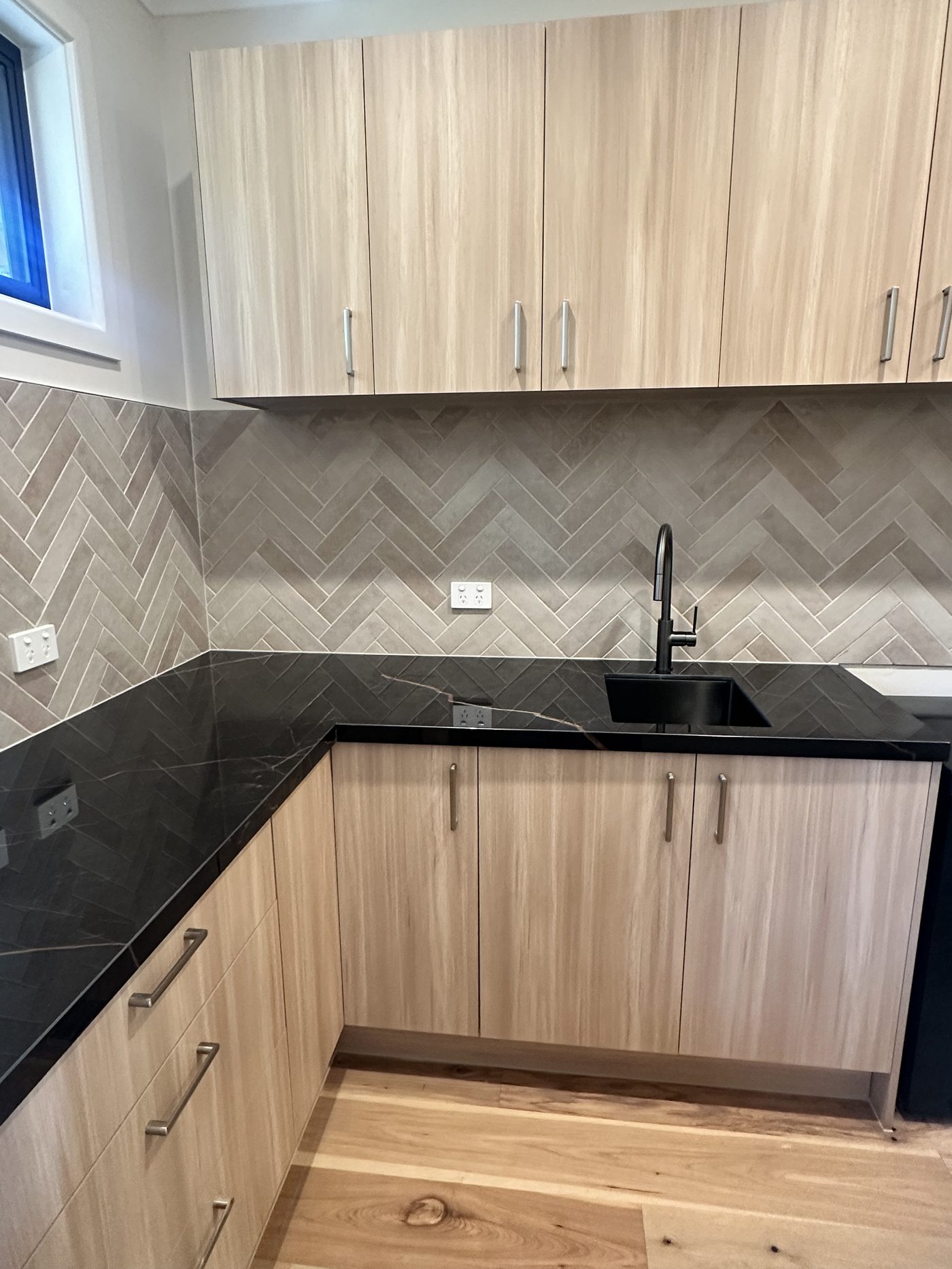
Kitchen benchtop costs in Australia
The benchtop is the most visible surface in your kitchen and one of the most significant line items in any renovation budget. Installed costs range from around $2,200 for a standard laminate benchtop in a medium kitchen, to $12,000 or more for a premium stone or porcelain slab with a waterfall edge.
The major variables are material, thickness, edge profile, the number of cutouts (sink, cooktop), and the linear metres of bench required in your specific layout.
Benchtop cost by material — installed
| Material | Cost per linear metre | Typical kitchen (5–7 LM) |
|---|---|---|
| Laminate (postform) | $250–$450 | $1,500–$3,500 |
| Laminate (square edge) | $350–$550 | $2,000–$4,500 |
| Engineered stone (20mm) | $550–$850 | $3,500–$6,500 |
| Engineered stone (40mm) | $750–$1,100 | $5,000–$8,500 |
| Porcelain slab (12mm) | $700–$1,100 | $5,000–$9,000 |
| Natural stone (granite/marble) | $800–$1,400 | $6,000–$12,000+ |
| Solid timber | $500–$900 | $3,500–$7,000 |
Note on engineered stone in Australia
Engineered stone containing crystalline silica above 1% is banned in Australia from 1 July 2024. This affects most traditional engineered stone products. Low-silica and silica-free alternatives are available but may carry a price premium. Confirm with your supplier that any stone product meets current Australian requirements.
What adds to benchtop cost
Waterfall ends. Running the benchtop material down the side of an island or peninsula adds significant material cost — typically $1,500–$4,000 depending on the material and drop height.
Undermount sink cutout. An undermount sink requires a clean, sealed cut in the benchtop. This typically adds $200–$400 to the fabrication cost versus a drop-in sink.
Cooktop cutout. Standard cutout, included in most quotes. Induction and gas cutouts vary slightly in complexity.
Splashback returns. If stone is being used as the splashback material to create a seamless look, this is costed separately — but the templating visit covers both.
Thickness. Moving from 20mm to 40mm stone roughly adds 30–40% to material cost and increases the visual weight of the surface dramatically.
Laminate vs stone — the honest trade-off
Laminate has improved significantly and modern square-edge profiles with quality finishes look genuinely good. For a rental, a budget renovation, or a secondary kitchen, laminate is the rational choice. The durability gap between laminate and stone has narrowed for everyday use — stone is susceptible to staining and chipping in ways laminate isn't.
Stone earns its premium in higher-end homes, where it adds tangible resale value and holds up to long-term use better than laminate. If you're renovating a property you plan to hold for 10+ years, engineered stone is generally the better long-term investment.
Getting an accurate benchtop quote
Benchtop fabricators will typically visit for a template (measure) after cabinets are installed. Until then, any quoted price is an estimate. To get a useful comparison, provide your approximate linear metres and specify material, thickness, and edge profile. This gives fabricators enough to price accurately.